
 400-136-4566
Date:2023-10-09View:597
1.Background
In response to the "Implementation Plan for Promoting the Use of LED Lighting Products in Guangdong Province" issued by the country and the People's Government of Guangdong Province (Guangdong Province Letter [2012] No. 113), Jiangmen Xinhui Urban Street Lamp Office organized the implementation of the "Execution of High-Pressure Sodium Lamps Above 150W on Xinhui Urban Roads" "LED Street Light Renovation Project", which aims to carry out energy-saving renovation of LED street lights for 4,373 high-pressure sodium lamps of 150W or above on 49 main roads in Xinhui City. Most lamps have a service life of more than 15 years, and some are more than 20 years old. The lamps are seriously aging, have high energy consumption, short service life, high maintenance costs, and low brightness. The lighting effect does not meet the national "Urban Road Lighting Design Standards" (CJJ45- 2015), affecting road traffic safety and citizen travel safety.
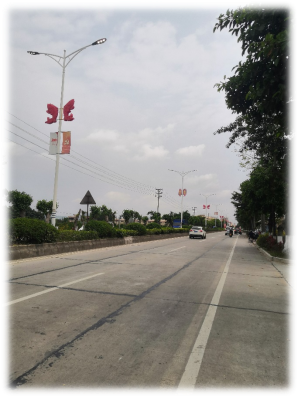
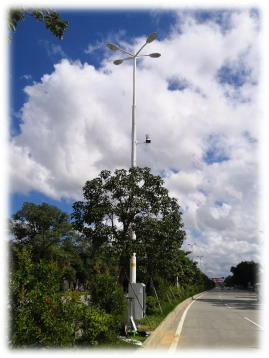
Intelligent transformation of Sanhe Avenue street lights/Intelligent transformation of street lights in Siqian Town
2.Project details
2.1. Transformation content
There are 887 150W high-pressure sodium lamps, 3258 250W high-pressure sodium lamps, 195 400W high-pressure sodium lamps, and 33 600W high-pressure sodium lamps, with a total power of 1,045,350 watts.
2.2. Transformation plan
① Use high-efficiency LED lamps to replace high-pressure sodium lamps.
② Establish a street light control system with wireless technology as the core.
③ Realize intelligent management of modified street lights.
2.3. Transformation goals
①After the implementation of energy-saving renovation of LED street lights, the illumination of urban road pavement has reached the requirements of the "Urban Road Lighting Design Standard" (CJJ45-2015).
②The comprehensive energy saving rate reaches more than 60%.
③ Realize the remote control function of 4373 LED street lights and realize intelligent management of street lighting.
3. Technical solutions
The original plan of the street light renovation project planned to use wireless technology to establish an intelligent street light control system.
Before the implementation of this project, relatively mature products were available for the street light control system based on PLC power line broadband carrier technology. Through close cooperation with R&D units, on-site trials, parameter testing, and redesign of product functions, the performance was stable and greatly improved. For the wireless street light control system, it was finally decided to use PLC broadband power line carrier technology with advanced technology, fast communication speed, wide communication bandwidth and stable performance to establish an intelligent street light control system.
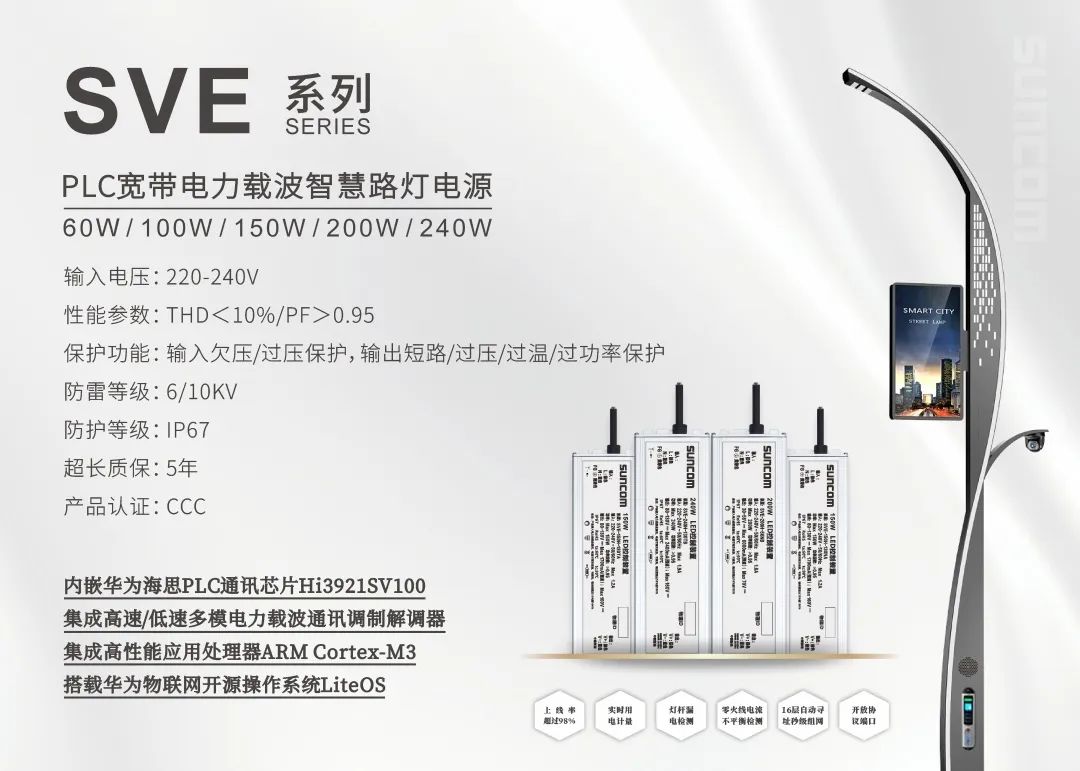
They used Suncom Power SVE series - PLC broadband power carrier integrated smart street light power supply as the solution.
4.Construction acceptance
① The on-site installation project started on October 1, 2017. First, 4,373 LED lamps were replaced and installed, street light controllers were installed on each LED lamp, signal concentrators were installed in 68 power supply area street light control boxes, and 71 Relay forwarding devices were installed at branch lines at each intersection, 492 sets of stainless steel connectors were installed on some special-shaped light poles, a set of intelligent street light control system management software was installed in the control center, and a street light control system based on PLC power line broadband carrier technology was established. .
② On-site construction was completed on December 29, 2017, and the system trial operation and debugging phase was entered on December 30, 2017. System debugging was completed on March 1, 2018. All lamps and lanterns have normal network communication and are online under control, fully achieving the contract requirements. System control function, the renovation project was fully completed, which lasted 6 months.
③On June 28, 2018, after the system had been put into trial operation for six months and all aspects of the project had been formally accepted by the District Street Lighting Institute, the system operation, management and maintenance were handed over to China Railway Wuhan Electrification Bureau Group Co., Ltd.
Attachment: From 2018 to May 2020, the high-pressure sodium lamp renovation project in Xinhui District, Jiangmen City has retrofitted a total of 10,000+ lamps.
5.Energy saving benefits
5.1.The actual monthly electricity consumption and monthly electricity bill of 4373 high-pressure sodium lamps before the transformation (as shown in the table below)
NO. | Calculate electricity cost savings | Content | Note |
1 | Electricity price (yuan/kWh) | 0.8843 | Calculated at 0.8843 yuan/degree |
2 | Number of sodium lamps (units) | 4373 | Total number of street lights |
3 | Sodium lamp actual power(Kw) | 1306.125 | Sodium lamp nominal power 1044.9×1.25 (sodium lamp power coefficient) |
4 | Months | Monthly electricity bill before renovation (yuan) | Monthly electricity bill calculation formula |
January | 454071.49 | Lighting time of the month 393.13×(3)×(1) | |
February | 395300.92 | Lighting time of the month 342.25×(3)×(1) | |
March | 415956.28 | Lighting time of the month 360.13×(3)×(1) | |
April | 379881.58 | Lighting time of the month 328.90×(3)×(1) | |
May | 372489.54 | Lighting time of the month 322.50×(3)×(1) | |
June | 350621.42 | Lighting time of the month 303.57×(3)×(1) | |
July | 367195.76 | Lighting time of the month 317.92×(3)×(1) | |
August | 384559.36 | Lighting time of the month 332.95×(3)×(1) | |
September | 393991.91 | Lighting time of the month 341.12×(3)×(1) | |
October | 429989.61 | Lighting time of the month 372.28×(3)×(1) | |
November | 434763.64 | Lighting time of the month 376.42×(3)×(1) | |
December | 459038.02 | Lighting time of the month 397.43×(3)×(1) |
5.2.Monthly lighting rate, energy saving rate and energy saving benefit since the system was put into operation in March 2018 are as follows:
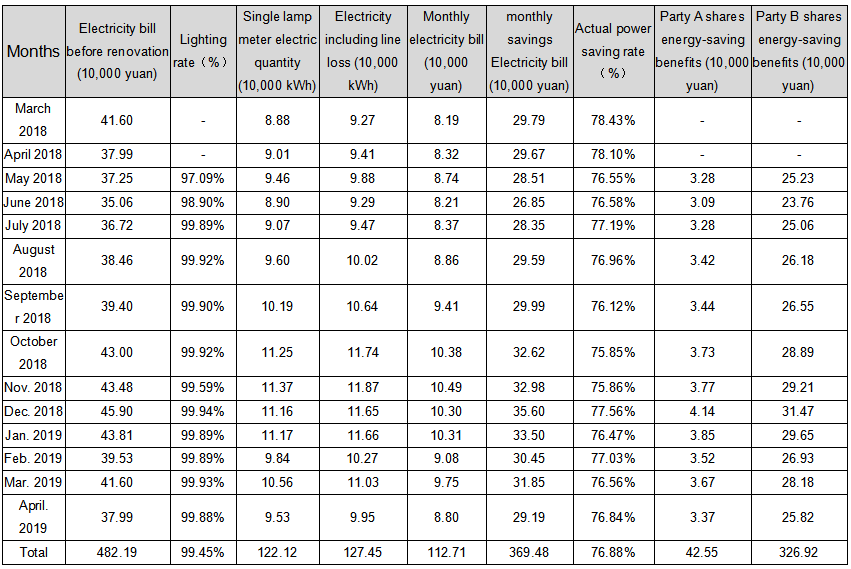
After the transformation of the energy-saving project was completed, under the full-power operation mode of the LED street lights, according to the "Energy Savings Test Report of the High-Pressure Sodium Lamp LED Street Light Renovation Project of Above 150W on Xinhui Urban Roads" issued by a third-party testing agency, the system power saving rate reached 62.74%, meeting the requirements The contract stipulates the requirement of ≥60%.
6.Emission reduction effect
Every time a power plant generates 1 kilowatt hour of electricity, it consumes 0.35Kg of standard coal and 4Kg of pure water, and emits 0.872Kg of carbon dioxide (CO2), 0.0263Kg of sulfur dioxide (SO2), 0.0131Kg of nitrogen oxides (NOX), and 0.238Kg of carbon dust. The annual emission reduction effect after implementing energy-saving renovations (as shown in the table below) :
Type | Electricity (10,000 kWh)) | Standard coal (tons) | Purified water (tons) | Carbon dioxide (tons) | Sulfur dioxide (tons) | Nitrogen oxides (tons) | Carbon dust (tons) |
HPS | 547.29 | 1915.52 | 21891.70 | 4772.39 | 143.94 | 71.70 | 1302.56 |
LED street light | 187.89 | 657.61 | 7515.54 | 1638.39 | 49.41 | 24.61 | 447.17 |
Emission reduction | 359.40 | 1257.91 | 14376.16 | 3134.00 | 94.52 | 47.08 | 855.38 |
7. Transformation results
7.1. Be the first to use broadband power line carrier technology in the national street light industry to solve the "last mile" communication bottleneck problem in street light intelligent control technology and improve the level of intelligent street light management. A data communication network based on power line broadband carrier technology with smart street lights as nodes and street light power lines as carriers has been established to realize the function of remote management of each street light. The smart street light controller has communication, control, measurement, and metering functions. It is an Internet of Things node that upgrades the urban lighting network into a power transmission network and a data communication network. Utilizing the geospatial resources, power resources, and communication resources of street light poles, we can provide integrated management and service functions for environmental monitoring equipment and public service equipment, and provide intelligent underlying solutions for the construction of future smart cities.
7.2. Real-time calculation function of lighting rate. After the street light system adopts single lamp control technology, the lighting rate is calculated by dividing the cumulative non-lighting time of the faulty lamps by the cumulative lighting time of all lamps, which has scientific and real assessment significance and abandons the unscientific estimation in the past.
7.3. Real-time measurement function of street lamp electricity consumption is realized.
7.4. Real-time monitoring function of street light pole leakage is realized.
7.5. Realize the intelligent management of on-demand lighting in the street lighting system.
7.6.More energy-saving and smarter than traditional LED lamp replacement solutions. The street light control system using power line broadband carrier technology can independently control any street light. In the street light power supply line design, there is no need to design two independent power supply lines for full night lights and midnight lights, which reduces line laying and directly reduces project costs and Maintenance costs. Utilizing the dimming function of the system to achieve on-demand lighting can save more than 75% of energy and reduce street light energy consumption. The single light control system collects current, voltage, active power, reactive power, electricity and other parameters for each street light and power supply circuit. If any line or street light fails, the fault type and location can be accurately located through real-time data analysis. There is no need for night patrol light management, which improves operation and maintenance efficiency and reduces maintenance costs.
7.7. Realize big data management of street light data. The power line broadband carrier street light control system has communication, control, measurement and metering functions. It is a "light networking" system that expands the functions of the street lighting system and enables the street lighting system to have data communication functions. It will become an important part of the construction of smart cities in the future. Technical Support.
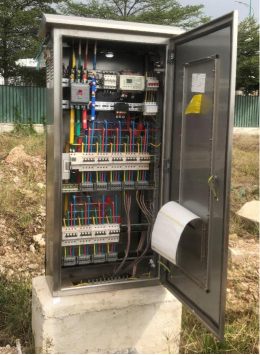
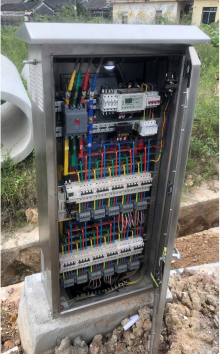
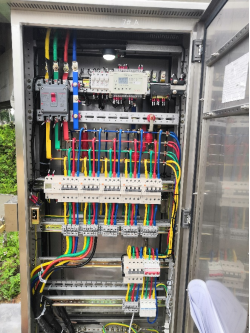
Street light construction project in the west section of Jiangmen Avenue
Overview:
1.Through data collection and monitoring of street light transformers, control boxes, street light fixtures and street light lines, we apply big data analysis methods to manage street light power consumption from the source. Through data analysis, we can calculate the line loss of the street light system and promptly detect unsafe conditions. Electricity theft due to electricity consumption and illegal access, as well as leakage, short circuit, open circuit, over current, overload and other fault phenomena due to line faults during the operation of the street light system, can provide timely alarms to ensure the safe operation of street light equipment.
2. The system records the power consumption of each street lamp, and upgrades the power consumption management of the control box in traditional street lamp management to the power consumption management of each street lamp, achieving refined management of street lamp power consumption. The intelligent street light control system realizes the operation and maintenance mode of street light management, self-inspection and self-maintenance. The system can detect faults in time and notify the operation and maintenance personnel to deal with the fault in a timely manner through alarms, which greatly improves the lighting rate of street lights and changes the previous reliance on manual inspection. The fault detection mode through citizens' phone calls and other channels has improved the management level of urban street light operation and maintenance.
3. The power line broadband carrier street light control system can enable street light lines to achieve 24-hour power supply mode and provide basic services for the construction of future smart cities, such as 5G base stations, environmental monitoring, road monitoring, one-click alarm, public information broadcast and other facilities are needed Comprehensive management functions such as geospatial information, power supply, and remote communications.
 Consulting service hotline


